Feedback Collection Tools to Elevate Your Product
Leverage advanced feedback collection tools to enhance your product, gain user insights, and drive growth with actionable, easy-to-use solutions.
Verified work reports
NDA-safe with full IP rights
Onboard in no time
15-day talent swap
Remote or on-location

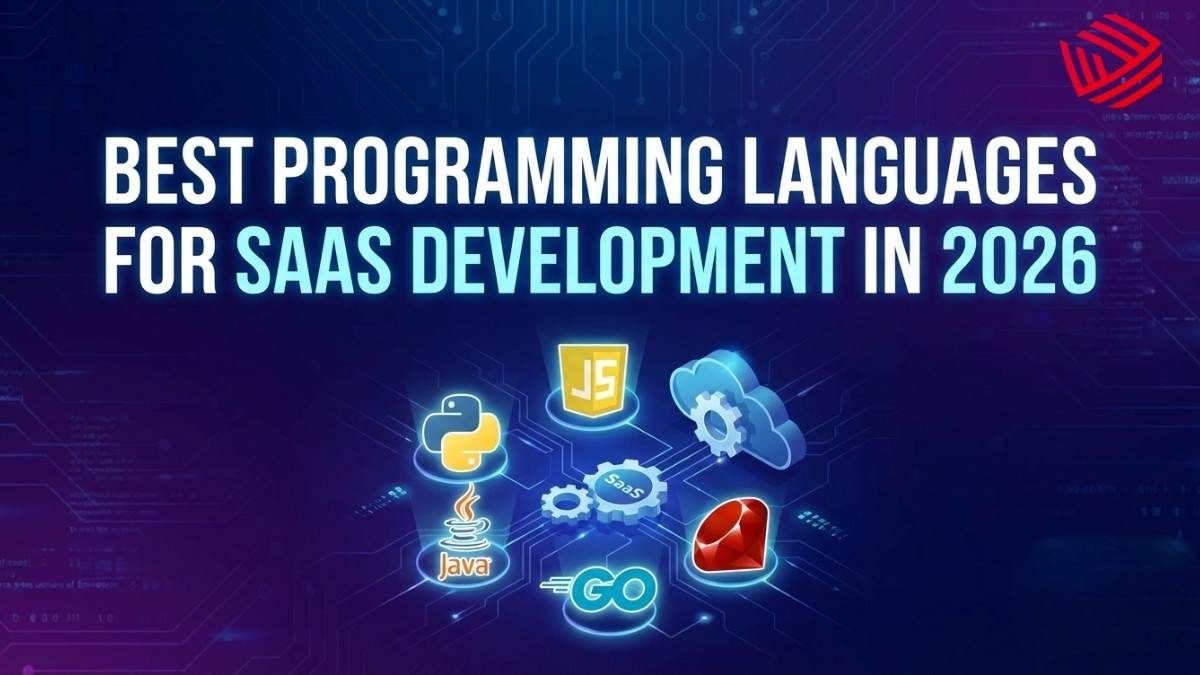
Access expert SaaS development with skilled engineers (5–8 years' experience). We deliver scalable, high-impact solutions across 20+ tech stacks. Fuel innovation, streamline processes, and enhance efficiency with cutting-edge SaaS technology.
SaaS development requires cloud expertise, a strong technical foundation, and a modern approach. Dappinity’s skilled developers specialize in server side and client side development, delivering innovative and cost effective solutions to drive your business forward.
Our consultants guide you from ideation to design, leveraging market analysis and best practices to build high performing SaaS products.
Smooth system integrations
Future-proof cloud architecture
Ongoing support and maintenance
Fast, efficient cloud migration
Cross-platform expertise
Our SaaS developers are proficient across a modern tech stack, enabling us to build robust and scalable cloud solutions as per your needs.
The team delivered high-quality work that met our expectations in terms of design and functionality.
Join Dappinity to work at the forefront of digital innovation, collaborating with top-tier tech talent on meaningful projects for global clients. We offer a flexible, remote-friendly work environment, competitive compensation, and clear career growth opportunities. At Dappinity, you’ll enjoy continuous learning, mentorship, and recognition in a collaborative, inclusive culture that values creativity, impact, and professional development. Elevate your career while shaping future-ready solutions with us.
Dappinity provides expert SaaS Developers offering scalable, innovative, and client-focused solutions while ensuring high quality and timely project delivery.
The dedicated SaaS Developers team at Dappinity delivers innovative, scalable, and secure solutions, ensuring seamless collaboration and future ready applications.

Tell us what you need - tech stack, experience, timelines.

We send you pre-screened developers matched to your needs.

You interview. You decide. Start in as little as 72 hours.

Easily scale up or down. We stay flexible as you grow.
When hiring SaaS developers, selecting the right engagement model is key to meeting your goals:
Ideal for startups and enterprises building or scaling a SaaS product long-term. These developers provide consistency, deep system understanding, and ongoing support.
Great for feature rollouts, system updates, or performance optimizations on an existing SaaS platform.
Best for quick tasks, bug fixes, UI enhancements, or testing. This model offers maximum flexibility.
Suited for building an MVP, adding a new module, or launching a complete SaaS product with a defined scope and timeline.
For SaaS applications, choosing the right development methodology ensures efficient delivery and rapid iteration. Here's what works best:
Enables iterative development, continuous feedback, and faster feature delivery. Perfect for SaaS products that evolve frequently based on user needs.
A structured Agile framework ideal for SaaS projects with recurring release cycles. Short sprints keep the team focused on delivering updates or improvements regularly.
A hybrid of Agile and DevOps ensures code is not only built quickly but also deployed and maintained efficiently. It emphasizes automation, CI/CD, and real-time monitoring—vital for SaaS reliability and scalability.
A skilled SaaS developer brings a blend of frontend, backend, cloud, and DevOps capabilities. Here's what to look for:
SaaS platforms must be reliable, secure, and scalable. Here’s how to enforce quality:
Conduct peer reviews to maintain best practices and detect issues early.
Automated testing encompasses unit tests to validate feature logic, integration tests to ensure cross-service communication, and end-to-end tests using tools like Cypress and Playwright to verify complete user workflows.
Enforce clean, readable, and error-free code using Prettier and ESLint.
Automate builds, testing, and deployments using tools like Jenkins, CircleCI, or GitHub Actions.
Set up real-time monitoring and structured logging to catch issues post-deployment.
Up-to-date product documentation, changelogs, and architecture diagrams, along with thorough commenting and internal wikis, are crucial for seamless onboarding and scalable growth.
Security is non-negotiable for SaaS platforms, especially when managing distributed teams:
Ensure compliance with GDPR, CCPA, HIPAA, or other industry regulations.
Choosing between a freelancer and a dedicated SaaS developer depends on your product's lifecycle:
Transform your ideas and imagination into powerful software. Choose Dappinity for dedicated and skilled SaaS development teams.
A dedicated SaaS developer ensures custom built, high performance applications with advanced cloud features, strong security, and seamless integration. Our developers provide continuous updates, technical support, and performance optimization for long term success.
The development timeline differs based on project scope. A basic SaaS MVP may take 3 - 6 months, while a fully featured enterprise SaaS application may require 9 - 18 months, depending on customization and integrations to be done.
SaaS developers work with ReactJS, AngularJS, NodeJS, Python, Ruby on Rails, Laravel, PostgreSQL, MySQL, MongoDB, Docker, Kubernetes, and cloud platforms like AWS, GCP, and Azure to build robust applications.
Yes, experienced SaaS developers implement AI driven analytics, machine learning (ML) models, and process automation to enhance SaaS functionality. Features like chatbots, predictive analytics, and workflow automation improve efficiency and user experience.
Look for developers with strong SaaS expertise, a proven portfolio, experience in cloud computing, security best practices, and industry specific knowledge. Prioritize developers who understand scalability, performance optimization, and integration capabilities.
Yes, developers can convert legacy software into a SaaS application by refactoring code, migrating to cloud infrastructure, and implementing multi-tenant architectures. This enhances accessibility, security, and performance while reducing maintenance costs.
To Hire SaaS Developers means working with professionals experienced in building subscription-based, cloud-hosted software products. A skilled saas developer understands multi-tenancy, scalability, security, and continuous deployment. This is especially important for businesses launching or improving SaaS platforms that must handle growing users and data reliably. Internal resources on SaaS architecture and product development can help users understand how SaaS differs from traditional software models.
A saas developer for hire is suitable when you need quick access to expertise without long recruitment cycles. Many companies choose this option for MVPs, feature upgrades, or scaling phases. If timelines are tight, a saas developer for hire today can help accelerate development while maintaining quality. You can explore internal guides comparing contract-based SaaS talent with permanent hiring to assess fit.
When you hire dedicated SaaS developer, you get a professional focused solely on your product roadmap, performance, and user experience. Dedicated developers bring continuity, domain understanding, and proactive problem-solving, which are critical for long-term SaaS success. This model works well for businesses planning ongoing enhancements, integrations, and optimizations. Related internal content on dedicated development teams explains how this approach improves ownership and stability.
Before choosing SaaS talent, assess experience with cloud platforms, APIs, data security, and CI/CD pipelines. A reliable SaaS professional should also understand billing logic, user roles, and performance monitoring. Whether you hire short-term or long-term, reviewing technical depth and real project experience is essential. Internal technical resources on SaaS best practices can guide users through evaluation criteria.