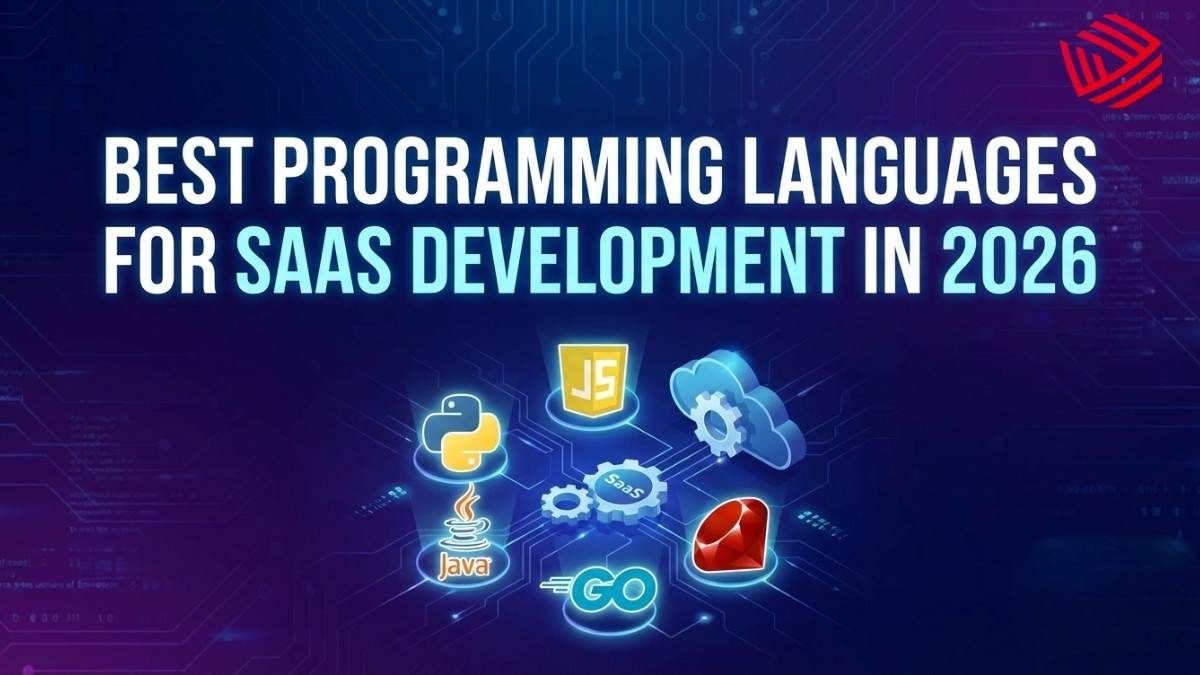
Best Programming Languages for SaaS Development in 2026

Best Programming Languages for SaaS Development in 2026

In 2026, building a SaaS product is easier than it was a decade ago—but choosing the wrong programming language can still slow you down, burn money, and frustrate users.

I’ve worked on SaaS products at different stages: early MVPs built in a rush, growing platforms fighting scaling issues, and mature products struggling with legacy code. One thing is consistent across all of them: the programming language you choose shapes your product’s speed, cost, scalability, and even your hiring ability.

This blog is not about trends or hype. It’s about real-world SaaS development, written for founders, CTOs, developers, and product teams who want clarity—not confusion.

By the end of this article, you’ll understand:

  • Which programming languages truly work best for SaaS in 2026
  • What each language is actually good at (and where it fails)
  • How to choose a language based on your product stage, budget, and team
  • Real examples from modern SaaS use cases

No buzzwords. No keyword stuffing. Just practical guidance.

What makes a programming language good for SaaS development?

Before naming any languages, let’s get one thing clear.

A “best” programming language for SaaS is not the most popular one or the newest one. It’s the one that helps you solve real SaaS problems efficiently.

A strong SaaS-friendly language usually offers:

1. Scalability without pain

SaaS products grow unpredictably. Your language should handle:

  • More users
  • More data
  • More API requests
    without constant rewrites.

2. Strong ecosystem and libraries

Payments, authentication, notifications, analytics—SaaS apps rely heavily on integrations. A mature ecosystem saves months of work.

3. Hiring and long-term maintainability

If only a few developers know the language, hiring becomes expensive. SaaS is a long game—maintainability matters more than clever code.

4. Cloud-native compatibility

In 2026, SaaS means cloud-first. Languages that work smoothly with AWS, GCP, Azure, Docker, Kubernetes, and serverless setups have a huge advantage.

5. Development speed

Time to market can decide whether your SaaS survives. Languages that allow rapid development and iteration are often better choices, especially early on.

With that foundation, let’s dive into the languages that truly shine for SaaS development in 2026.

JavaScript (Node.js): The backbone of modern SaaS

If SaaS development had a default language in 2026, JavaScript would be it.

JavaScript, powered by Node.js, dominates SaaS development for one simple reason: it works everywhere.

Why JavaScript is still winning in 2026

JavaScript runs:

  • On the backend (Node.js)
  • On the frontend (React, Vue, Angular)
  • On mobile (React Native)
  • On serverless platforms

This “one language everywhere” approach reduces friction across teams.

Real SaaS strengths

  • Perfect for API-driven applications
  • Handles real-time features like chat, notifications, and dashboards
  • Massive ecosystem (NPM still leads in package availability)
  • Strong support for microservices and serverless architecture

Where JavaScript shines most

JavaScript is ideal for:

  • Startup SaaS MVPs
  • B2B dashboards
  • Collaboration tools
  • Subscription-based platforms
  • Real-time apps (chat, tracking, analytics)

Honest limitations

JavaScript can struggle with:

  • CPU-heavy operations
  • Large monolithic applications without strict structure
  • Poorly managed async code (if teams lack discipline)

In 2026, most mature teams use TypeScript with Node.js, adding type safety without losing flexibility.

Verdict:
If speed, flexibility, and hiring ease matter—and they usually do—JavaScript remains one of the safest SaaS choices.

Python: Simplicity meets serious power

Python continues to thrive in SaaS development, especially where clarity and data matter.

Despite being older than many “modern” languages, Python feels more relevant than ever in 2026.

Why SaaS teams love Python

Python is readable, simple, and expressive. Teams move fast because the code is easy to understand—even months later.

Frameworks like Django and FastAPI make backend development clean and predictable.

Best SaaS use cases for Python

Python is exceptional for:

  • AI-powered SaaS platforms
  • Data analytics and reporting tools
  • Fintech products
  • Healthcare SaaS
  • Internal business tools

If your SaaS involves:

  • Machine learning
  • Automation
  • Data pipelines
    Python is almost impossible to beat.

Scalability reality check

Python can scale well when:

  • Used with proper architecture
  • Combined with async frameworks
  • Deployed using cloud-native patterns

But it’s not the fastest language at runtime. Many teams handle this by offloading heavy processing to background jobs or microservices.

Verdict:
Python is perfect when clarity, intelligence, and long-term maintainability matter more than raw speed.

Java: Still a SaaS giant in enterprise products

Java has survived every “Java is dead” prediction—and in 2026, it’s still powering massive SaaS platforms.

Why Java refuses to disappear

Java offers:

  • Rock-solid stability
  • Predictable performance
  • Excellent tooling
  • Strong backward compatibility

For enterprise SaaS products handling sensitive data, Java remains a trusted choice.

Where Java dominates

Java excels in:

  • Enterprise SaaS platforms
  • Banking and finance software
  • Large-scale B2B systems
  • Compliance-heavy industries

Frameworks like Spring Boot make modern Java development faster and cleaner than ever.

The trade-off

Java development is:

  • More verbose than Python or JavaScript
  • Slower for rapid prototyping
  • Less flexible for small startup teams

But for long-term, high-scale SaaS platforms, these trade-offs are often acceptable.

Verdict:
If your SaaS targets enterprises and must run reliably for years, Java remains a strong, safe choice.

Go (Golang): Built for cloud-native SaaS

Go has matured beautifully and fits modern SaaS architecture almost perfectly.

Designed at Google, Go feels purpose-built for distributed systems.

Why Go is rising fast in SaaS

Go is:

  • Extremely fast
  • Simple to read
  • Excellent for concurrency
  • Easy to deploy as single binaries

In a microservices world, these traits matter a lot.

Ideal SaaS use cases

Go is great for:

  • API-heavy SaaS platforms
  • High-traffic backend services
  • DevOps and infrastructure tools
  • Fintech and payment platforms

Many SaaS companies use Go for:

  • Core services
  • Performance-critical components
  • Background workers

Where Go falls short

Go is not ideal for:

  • Rapid UI-driven development
  • Complex business logic with frequent changes
  • Teams unfamiliar with systems programming

Verdict:
If performance and scalability are top priorities, Go is one of the best SaaS languages in 2026.

Ruby: Still relevant for fast-moving SaaS teams

Ruby may no longer dominate headlines, but Ruby on Rails continues to quietly power successful SaaS businesses.

Why Rails still works

Rails offers:

  • Exceptional developer productivity
  • Strong conventions
  • Mature ecosystem
  • Excellent community support

Many profitable SaaS products still run on Rails—and run well.

Best scenarios for Ruby

Ruby shines when:

  • Building MVPs fast
  • Small to mid-size SaaS products
  • Teams value clean, readable code

Scalability reality

Rails can scale, but:

  • It requires experienced engineers
  • Performance tuning becomes important at high traffic

Verdict:
Ruby is still a great choice for SaaS teams that prioritize speed, clarity, and developer happiness.

PHP: Quietly powering SaaS at scale

PHP often gets unfair criticism, but modern PHP is very different from its early days.

Why PHP still matters

With frameworks like Laravel, PHP offers:

  • Clean syntax
  • Strong MVC structure
  • Massive hosting support
  • Lower development cost

Many SaaS products—especially in SMB and eCommerce—still rely on PHP.

Best SaaS use cases

PHP works well for:

  • Subscription platforms
  • CMS-based SaaS tools
  • Content-heavy applications
  • Budget-conscious startups

Verdict:
PHP is practical, cost-effective, and still very relevant for SaaS in 2026.

Rust: Powerful but selective

Rust is gaining respect for its performance and safety—but it’s not for everyone.

Where Rust fits in SaaS

Rust is excellent for:

  • Performance-critical services
  • Security-focused platforms
  • Infrastructure-level components

Why it’s not mainstream yet

Rust has:

  • Steep learning curve
  • Slower development speed
  • Smaller talent pool

Many SaaS teams use Rust selectively, not as a primary language.

Verdict:
Rust is powerful—but best used surgically, not everywhere.

How to choose the right SaaS programming language for your product

There is no universal winner. The “best” language depends on your situation.

Choose JavaScript or Python if:

  • You’re building an MVP
  • You need fast iteration
  • You want easy hiring
  • You value flexibility

Choose Java or Go if:

  • You expect high traffic early
  • Reliability is critical
  • You’re building for enterprises

Choose Ruby or PHP if:

  • Speed to market matters most
  • You want proven SaaS frameworks
  • Budget is a concern

Avoid choosing a language just because:

  • It’s trending on social media
  • One developer prefers it
  • It sounds “advanced”

SaaS success comes from clarity, execution, and user value, not flashy tech stacks.

Final thoughts: Build for users, not for trends

In 2026, the best SaaS products are not built with the “coolest” languages. They’re built with reliable, understandable, and scalable tools chosen by thoughtful teams.

A good programming language disappears into the background and lets your product shine.

If you focus on:

  • Solving real user problems
  • Building clean, maintainable systems
  • Choosing tools your team truly understands

You’ll already be ahead of most SaaS products.
More Blogs

ChatOps Tools to Enhance Developer Collaboration | Dappinity

ChatOps Tools to Enhance Developer Collaboration | Dappinity

ChatOps integrates chat platforms with DevOps workflows, enabling developers to collaborate and execute tasks directly from messaging tools. These tools improve communication, automate routine tasks, and reduce context switching. By connecting pipelines, monitoring systems, and incident management into chat, teams can respond faster and work more efficiently. Adopting ChatOps tools ensures transparency, better coordination, and streamlined collaboration for modern development teams.

by ankit 5 March 2025
Ensuring UI Consistency with Visual Regression Testing Tools

Ensuring UI Consistency with Visual Regression Testing Tools

Visual regression testing ensures consistent UI experiences by automatically detecting unexpected design changes across browsers, devices, and updates before they impact users.

by manish 5 March 2025
Top CI/CD Tools for Scalable Web Apps

Top CI/CD Tools for Scalable Web Apps

Read how CI/CD streamlines code integration, testing, and deployment—boosting speed, quality, and scalability in modern software development.

by varsha 5 March 2025
Top AI Tools for Database Query Optimization and Monitoring

Top AI Tools for Database Query Optimization and Monitoring

Database performance is critical for modern applications, and AI tools are making optimization faster and smarter. They provide predictive insights, automated query tuning, and real-time monitoring. From simple AI2SQL recommendations to enterprise-grade SolarWinds analysis, these tools reduce manual effort. Teams can now maintain high performance, avoid bottlenecks, and ensure reliable user experiences with AI-powered database solutions.

by manish 5 March 2025
Top Low-Code and No-Code Platforms to Watch in 2025

Top Low-Code and No-Code Platforms to Watch in 2025

Low-code and no-code (LCNC) platforms are reshaping application development, enabling both developers and non-technical users to build faster and smarter. By 2025, they’re vital for digital transformation across industries. With AI integration, enterprise adoption, and improved security, LCNC tools support innovation at scale. Choosing the right platform empowers businesses to reduce costs, improve agility, and stay competitive in a rapidly evolving market.

by manish 5 March 2025
How Analyzing Log Patterns Transforms Debugging and Monitoring

How Analyzing Log Patterns Transforms Debugging and Monitoring

Analyzing log patterns turns raw system data into actionable intelligence, enabling faster debugging and predictive monitoring. Instead of firefighting after failures, teams gain context, uncover root causes, and detect anomalies before they escalate. From error clustering to capacity planning, pattern analysis strengthens security, performance, and compliance. By leveraging AI-driven tools, businesses can transform logs into a proactive strategy for resilience and customer trust.

by varsha 5 March 2025
Top 5 Emerging Software Testing Roles Every Product Company Needs

Top 5 Emerging Software Testing Roles Every Product Company Needs

Discover the top 5 emerging software testing roles every product company needs, from AI testing engineers to QAOps specialists, and boost product quality.

by varsha 5 March 2025
Top AI Tools for Progressive Web App Performance Optimization

Top AI Tools for Progressive Web App Performance Optimization

Progressive Web Apps are expected to deliver app-like experiences at web scale, but optimizing performance can be complex. AI-powered tools provide automated monitoring, predictive insights, and actionable recommendations for load speed, caching, and responsiveness. By leveraging these tools, developers can ensure a seamless user experience while reducing manual tuning effort. The right AI solutions make PWAs faster, smarter, and more reliable.

by ankit 5 March 2025
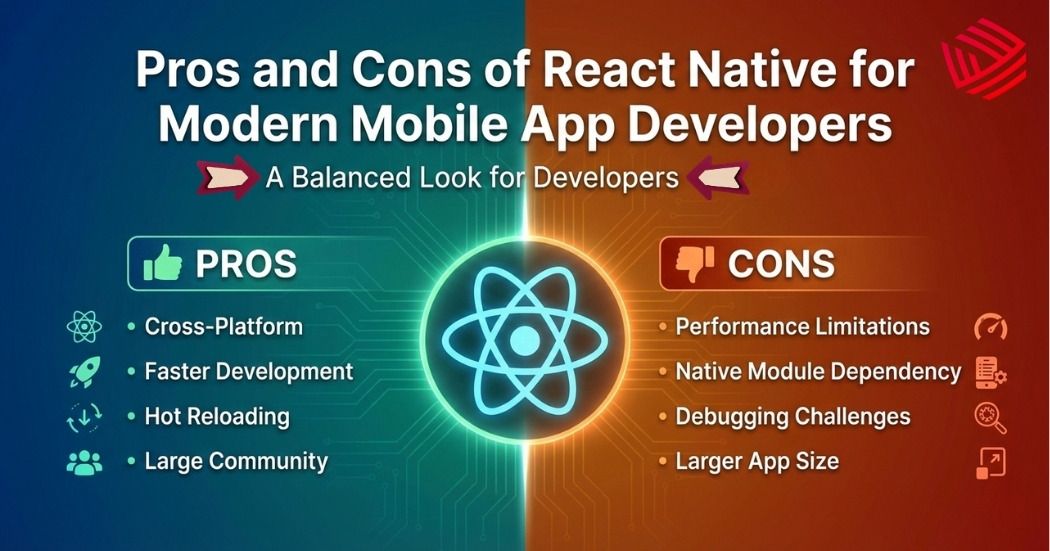
Pros and Cons of React Native for Modern Mobile App Developers

Pros and Cons of React Native for Modern Mobile App Developers

React Native has become a popular choice for building mobile apps, but it is not a one-size-fits-all solution. This in-depth guide explores its practical benefits, real limitations, and when it makes sense for modern mobile app developers.

by manish 5 March 2025
AI Tools for Accelerating Developer Ramp-Up and Productivity

AI Tools for Accelerating Developer Ramp-Up and Productivity

Onboarding and ramping up new developers can be time-consuming, but AI tools simplify the process. From GitHub Copilot’s smart code suggestions to Sourcegraph’s intelligent code search, these platforms help developers understand codebases and workflows quickly. Tools like LinearB, Codex, and Tabnine further enhance productivity by automating routine tasks and providing real-time guidance. AI-powered ramp-up ensures faster integration, reduced errors, and higher team efficiency.

by manish 5 March 2025
AWS Developer vs AWS DevOps Engineer

AWS Developer vs AWS DevOps Engineer

Discover the real difference between an AWS Developer and an AWS DevOps Engineer in 2025. This in-depth guide explains roles, skills, certifications, AWS CI/CD pipelines, IaC tools, salaries, career paths, and how to choose the right certification—Developer Associate vs DevOps Professional—based on your goals. Perfect for beginners, students, job seekers, and professionals planning AWS careers in India, the US, and globally.

by ankit 5 March 2025
Testing dApps: Frameworks, Best Practices & Pitfalls

Testing dApps: Frameworks, Best Practices & Pitfalls

Discover how to test decentralized applications with the right frameworks, best practices, and security-focused testing strategies. This guide explains smart contract testing, performance checks, and common pitfalls to help you build reliable, scalable, and secure dApps that deliver a seamless Web3 experience.

by manish 5 March 2025
Top Tools Frontend Developers Use to Speed Up Web Development

Top Tools Frontend Developers Use to Speed Up Web Development

Discover the top tools frontend developers use to speed up web development, improve coding efficiency, simplify UI design, and deliver high-performance, modern websites faster than ever.

by varsha 5 March 2025
React Native Developers vs Swift Developers for iOS Apps

React Native Developers vs Swift Developers for iOS Apps

Choosing between React Native developers and Swift developers can shape the success of an iOS app. This guide explains real differences, use cases, costs, and long-term impact.

by varsha 5 March 2025
Top Platforms & Tools for Building Serverless and Containerized Applications in 2025

Top Platforms & Tools for Building Serverless and Containerized Applications in 2025

Modern software development has shifted from monolithic architectures to more agile approaches. Serverless applications remove infrastructure concerns, while containerized applications ensure consistency across environments. In 2025, top platforms like AWS Lambda, Kubernetes, and Docker lead the way in scalability and efficiency. Businesses can adopt either model — or a hybrid approach — to build flexible, cost-effective, and future-ready applications.

by manish 5 March 2025
Top Reverse Proxy Tools

Top Reverse Proxy Tools

A reverse proxy is a critical component in modern web infrastructure that sits between client devices and backend servers to manage, secure, and optimize traffic. It provides key functionalities such as load balancing, SSL termination, caching, security filtering, application firewalling (via WAF), global server load balancing, URL rewriting, rate limiting, and protocol translation. Reverse proxies enhance application performance, scalability, and security while simplifying authentication and traffic management. Popular tools like NGINX, HAProxy, Traefik, Envoy, and managed services like AWS ALB and Azure Gateway cater to various use cases—from microservices and containerized apps to enterprise-grade security. As architectures evolve, reverse proxies are becoming more intelligent, integrated into service meshes, edge-focused, and AI-enhanced for real-time traffic optimization and threat detection, making them indispensable for delivering reliable, scalable, and secure digital experiences.

by manish 5 March 2025
Top API Testing Tools For Developers

Top API Testing Tools For Developers

This guide highlights the top API testing tools for developers in 2026, comparing platforms like Postman, SoapUI, Katalon, Insomnia, Hoppscotch and more to help teams automate and validate APIs efficiently.

by varsha 5 March 2025
Top GraphQL IDEs & Clients

Top GraphQL IDEs & Clients

GraphQL IDEs and clients have become essential tools in the modern API development lifecycle, offering powerful features for exploring, testing, visualizing, and monitoring GraphQL APIs. As the demand for flexible, schema-driven APIs grows, tools like GraphiQL, Apollo Studio, Postman, Insomnia, and others have emerged to support everything from query execution to performance observability and team collaboration. These platforms cater to a wide range of use cases—from solo developers and educators to large enterprise teams—by enhancing productivity, streamlining debugging, and promoting best practices. Looking ahead, advancements in AI, CI/CD integration, real-time collaboration, and security will continue to shape the future of GraphQL tooling.

by ankit 5 March 2025
Advanced Java Skills That Separate Junior and Senior Developers

Advanced Java Skills That Separate Junior and Senior Developers

This blog explains the advanced Java skills that truly separate junior and senior developers, covering core Java mastery, JVM internals, concurrency, system design, performance optimization, and real-world best practices needed to grow into a senior Java role.

by manish 5 March 2025
Role of NodeJS Developers in API-First Application Development

Role of NodeJS Developers in API-First Application Development

API-first development has become the backbone of modern digital products. This detailed guide explains how NodeJS developers design, build, and scale APIs that power flexible, future-ready applications.

by varsha 5 March 2025
Top iOS Frameworks Every iPhone App Developer Should Know

Top iOS Frameworks Every iPhone App Developer Should Know

Discover the most powerful iOS frameworks every iPhone app developer should master to build faster, scalable, secure, and performance-driven mobile applications.

by varsha 5 March 2025
Top Frameworks and Tools Used by Professional MEAN Stack Developers

Top Frameworks and Tools Used by Professional MEAN Stack Developers

This in-depth guide explores the most trusted frameworks and tools used by professional MEAN stack developers to build secure, scalable, and high-performance web applications. It explains how each tool fits into real-world development workflows, helping businesses and developers make smarter technology choices.

by ankit 5 March 2025
Top DevOps Tools Every Team Should Use

Top DevOps Tools Every Team Should Use

DevOps tools streamline software development by automating coding, testing, deployment, and monitoring, improving efficiency, collaboration, and security. Key tools like Jenkins, Docker, Kubernetes, Ansible, and Git enable faster releases, better infrastructure management, and consistent environments. Integrated security practices (DevSecOps) ensure early detection of vulnerabilities, while continuous monitoring and real-time feedback enhance software quality and resilience.

by ankit 5 March 2025
Top Tools and IDEs PHP Developers Use for Faster & Efficient Coding

Top Tools and IDEs PHP Developers Use for Faster & Efficient Coding

Discover the top tools and IDEs PHP developers use for faster, more efficient coding. Learn about editors, debugging tools, and workflow boosters to improve productivity and code quality.

by manish 5 March 2025
Best ReactJS developers for building admin panels and internal tools

Best ReactJS developers for building admin panels and internal tools

Choosing the best ReactJS developers is critical for building reliable admin panels and internal tools. This guide explains what makes ReactJS ideal, what skills matter most, and how expert developers deliver scalable internal systems.

by ankit 5 March 2025

More Talents