Software testing has changed more in the last ten years than in the previous twenty. Earlier, many testers built strong careers without writing a single line of code. That reality has shifted. Today, testers are expected to automate repetitive tasks, understand application behavior, and collaborate closely with developers.
This change often creates anxiety, especially for manual testers who ask a very common question: Which programming language should I learn, and do I really need it?
The honest answer is yes, programming skills matter in 2026—but not in the way many people fear. Testers are not expected to become full-time developers. Instead, they need practical coding knowledge that helps them test better, automate smarter, and communicate clearly with development teams.
This article is written from the perspective of real software development experience. It explains the best programming language for software testers in 2026 using simple language, real examples, and clear guidance. No hype, no pressure—just honest advice that helps you move forward with confidence.
Why Software Testers Need Programming Skills in 2026
Modern software systems are complex. Applications now rely on APIs, cloud infrastructure, microservices, and continuous delivery pipelines. Testing these systems manually is slow, error-prone, and often incomplete.
Programming knowledge helps testers in practical ways. It allows them to automate repetitive tests, validate backend logic, analyze logs, and understand why bugs happen—not just that they happen.
More importantly, programming skills give testers independence. Instead of waiting for developers to explain every issue, testers can explore problems themselves and provide clearer feedback.
In 2026, companies value testers who think technically, solve problems independently, and contribute beyond basic test execution. Programming is a tool that enables all of this.
Clearing a Common Fear: Testers Don’t Need to Become Developers
One of the biggest misconceptions is that testers must learn deep software engineering concepts to survive. This is not true.
Testers need useful coding skills, not advanced system design or complex algorithms. The goal is to write readable test scripts, understand application flows, and automate checks that improve product quality.
Think of programming as a support skill—like learning how to drive so you can reach your destination, not to become a professional racer.
With this mindset, learning a programming language becomes far less intimidating.
What Makes a Programming Language Suitable for Software Testers
Not every programming language is ideal for testers. The best language for testing in 2026 should be easy to read, simple to write, and widely supported by testing tools.
It should allow testers to focus on logic and behavior, not syntax complexity. A strong ecosystem of automation frameworks, tutorials, and community support also matters greatly.
Finally, the language should align with real industry usage, so the skills remain valuable across companies and projects.
Python: The Most Practical Choice for Software Testers
Python stands out as the most balanced and beginner-friendly programming language for software testers in 2026. It is easy to read, forgiving for beginners, and powerful enough for advanced automation.
Many testers successfully write their first automation scripts in Python within weeks. The language feels close to plain English, which reduces mental load and builds confidence.
Python is widely used in test automation frameworks for UI testing, API testing, and backend validation. It also integrates well with data analysis and reporting tools, which helps testers understand test results more deeply.
For example, a tester can use Python to automate login flows, validate API responses, compare database records, and generate readable test reports—all within the same language.
Another major advantage is Python’s relevance beyond testing. Skills learned here can later support roles in automation engineering, quality engineering, and even data-focused testing.
Java: A Strong Option for Enterprise Testers
Java has been a long-standing favorite in the testing world, especially in large organizations. Many popular test automation frameworks are built around Java, making it a common requirement in enterprise projects.
Java is more structured than Python. This can feel challenging at first, but it also helps testers understand application architecture and object-oriented concepts.
Testers working in environments where development teams already use Java often benefit from learning the same language. It improves collaboration and makes debugging discussions easier.
However, Java usually requires more time to learn compared to Python. For testers who prefer clear structure and long-term enterprise relevance, it remains a solid choice in 2026.
JavaScript: Useful for Modern Web Testing
JavaScript is the language of the web. In 2026, many applications rely heavily on JavaScript frameworks on both frontend and backend systems.
For testers working on web applications, learning JavaScript can be extremely helpful. It allows them to understand how user interactions trigger application behavior and how frontend logic affects testing outcomes.
JavaScript is commonly used in modern testing tools that focus on fast and reliable browser automation. Testers who understand JavaScript often find it easier to debug UI issues and collaborate with frontend developers.
While JavaScript syntax can feel inconsistent at times, its real-world relevance makes it a valuable skill for testers involved in web-heavy projects.
C#: A Practical Choice for Microsoft-Centered Teams
C# is a popular choice among companies that build and operate software within the Microsoft ecosystem. Testers working in such environments often benefit from learning C#, as it aligns closely with development practices.
C# supports strong automation frameworks and integrates well with enterprise testing tools. Its syntax is clear and structured, which helps testers write maintainable test code.
By 2026, C# continues to be a strong choice for software testers working in enterprise settings, financial institutions, and internal systems built on Microsoft platforms.
How Testers Should Choose the Right Language
The best programming language for a tester is not always the most popular one. It depends on the type of applications you test, your career goals, and your comfort level.
If you are new to coding, starting with Python is often the least stressful path. If you work in enterprise environments, Java or C# may provide better alignment. For web-focused testing, JavaScript can offer immediate value.
What matters most is consistency. Learning one language well is far more useful than knowing a little of many.
Real-World Example: From Manual Tester to Automation Confidence
Consider a manual tester who spends hours repeating the same regression tests every week. After learning basic Python, they automate these checks and reduce execution time from hours to minutes.
This approach reduces effort while increasing trust in the overall process. The tester begins exploring API testing, validating data flows, and catching bugs earlier. Over time, their role evolves naturally without pressure or forced transitions.
This is how programming skills should empower testers—gradually and practically.
Common Mistakes Testers Should Avoid
Many testers try to learn everything at once. This often leads to frustration and burnout. Programming is best learned step by step, with real testing problems as practice.
Another mistake is focusing only on syntax instead of logic. Understanding why a test exists is more important than how elegant the code looks.
Testers should also avoid comparing themselves to developers. The goal is quality, not competition.
The Future of Software Testing Careers
In 2026, the line between tester and quality engineer continues to blur. Testers who understand programming are better positioned to grow into automation specialists, QA engineers, and quality leaders.
However, human judgment, curiosity, and critical thinking remain irreplaceable. Programming enhances these skills—it does not replace them.
Testers who combine technical skills with strong testing fundamentals will continue to be highly valued.
Final Thoughts
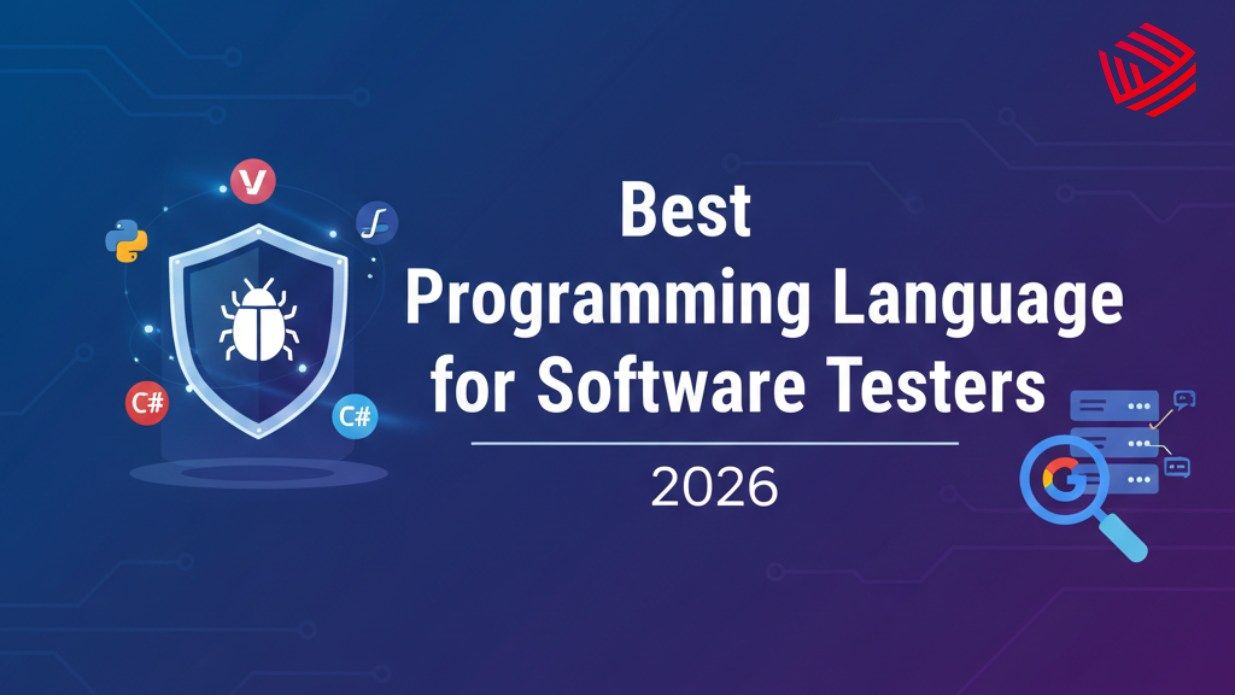
The best programming language for software testers in 2026 is the one that helps you test better, learn faster, and grow confidently. For most testers, Python offers the best balance of simplicity and power. Java, JavaScript, and C# remain strong options depending on your environment.
You do not need to rush or feel overwhelmed. Start small, practice consistently, and focus on solving real testing problems. Programming is not a barrier—it is a bridge to a stronger, more secure testing career.
With the right approach, learning to code becomes one of the most rewarding steps a software tester can take in 2026.