Web development has evolved rapidly, yet some frameworks continue to stand strong despite changing trends. Ruby on Rails is one such technology. While newer frameworks often grab attention, Rails has quietly remained a reliable choice for teams that value speed, clarity, and long‑term maintainability.
Modern web applications demand more than just functionality. They require clean architecture, rapid iteration, security, scalability, and a pleasant developer experience. Ruby on Rails was designed with these priorities in mind, which explains why it still powers thousands of production‑ready platforms across industries.
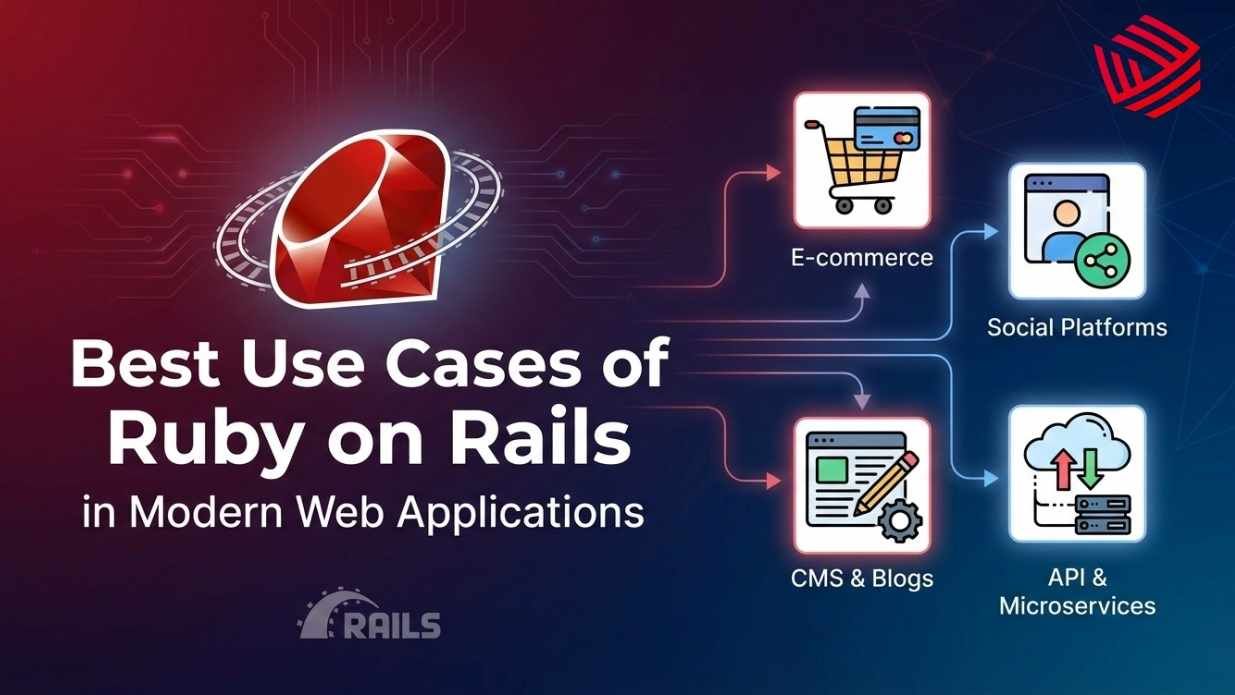
This article explores the best use cases of Ruby on Rails in modern web applications. Instead of focusing on theory, it explains where Rails performs best today, why companies continue to trust it, and how it solves real problems for businesses and development teams.
Understanding Ruby on Rails in Today’s Web Ecosystem
Ruby on Rails is a full-stack web framework built around convention over configuration. It emphasizes simplicity, readable code, and rapid development without sacrificing structure. Rather than forcing developers to make countless decisions upfront, Rails provides sensible defaults that help Speed Up Web Development while keeping applications organized.
In a modern context, Rails integrates smoothly with APIs, cloud infrastructure, front‑end frameworks, and background processing tools. This adaptability allows it to remain relevant even as application architectures become more complex.
Why Ruby on Rails Still Matters in Modern Web Development
One of the key strengths of Ruby on Rails is its focus on productivity. Developers can move from idea to working product quickly, which is critical in competitive markets. At the same time, Rails encourages clean code patterns that support long-term growth and Building Scalable Applications without excessive technical debt.
Security is another major reason Rails remains popular. Built‑in protections against common vulnerabilities reduce risk and save development time. Combined with a mature ecosystem and strong community support, Rails offers stability that newer frameworks often lack.
Startup and MVP Development
One of the most common and effective use cases of Ruby on Rails is building startups and minimum viable products. Early‑stage companies need to validate ideas quickly without investing excessive time or money in infrastructure.
Rails enables rapid feature development, easy iteration, and quick pivots. Its built‑in tools handle essential needs such as authentication, database management, and background jobs, allowing teams to focus on solving core business problems.
Many successful startups began with Rails because it helped them reach the market faster while maintaining a solid technical foundation.
SaaS Platforms and Subscription‑Based Products
Ruby on Rails is particularly well‑suited for software‑as‑a‑service platforms. SaaS products often require user authentication, role management, billing systems, and frequent feature updates.
Rails simplifies these requirements through its structured approach and extensive libraries. Subscription handling, payment integrations, and account management can be implemented efficiently, making Rails a practical choice for both B2B and B2C SaaS businesses.
As products grow, Rails applications can scale horizontally with proper architecture and infrastructure planning.
Content‑Driven Websites and CMS Platforms
Content‑heavy websites benefit greatly from Ruby on Rails. Blogs, news portals, documentation platforms, and editorial systems require flexible content management and reliable performance.
Rails excels at handling structured data, relationships, and user roles. Its MVC architecture makes it easy to separate content logic from presentation, resulting in cleaner, more maintainable systems.
Custom CMS platforms built with Rails often outperform generic solutions because they are tailored to specific business needs.
E‑Commerce and Marketplace Applications
Modern e‑commerce platforms require more than product listings and checkout pages. They must support inventory management, user accounts, payment gateways, analytics, and integrations with third‑party services.
Ruby on Rails provides a strong foundation for building custom e‑commerce solutions. Its flexibility allows developers to create tailored shopping experiences without being locked into rigid templates.
Marketplaces that connect buyers and sellers also benefit from Rails’ ability to manage complex relationships and transactional workflows.
API‑First and Backend‑Heavy Applications
Many modern web applications rely on APIs to serve mobile apps, single-page applications, or external integrations. Ruby on Rails supports API-first development through lightweight configurations and RESTful conventions, making it a reliable backend choice for Modern Mobile App Developers working with evolving front-end technologies.
Rails APIs are easy to maintain and scale, making them ideal for applications where the backend handles business logic while the frontend evolves independently.
This approach is common in modern architectures that prioritize flexibility and long‑term adaptability.
Enterprise Web Applications
Contrary to outdated assumptions, Ruby on Rails is not limited to small projects. Many enterprise organizations use Rails for internal tools, dashboards, and customer‑facing platforms.
Rails helps large teams maintain consistency and code quality across complex systems. Its conventions reduce onboarding time for new developers and encourage shared best practices.
With proper governance and architecture, Rails applications can meet enterprise‑level performance and security requirements.
Data‑Driven and Reporting Platforms
Applications that focus on analytics, reporting, and data visualization require strong backend logic and efficient database handling. Ruby on Rails supports these needs through Active Record and robust querying capabilities.
Rails integrates easily with data processing tools and background workers, allowing applications to generate reports, dashboards, and insights without performance bottlenecks.
Rapid Prototyping and Internal Tools
Internal tools often need to be built quickly and maintained with minimal overhead. Ruby on Rails is an excellent choice for dashboards, admin panels, and operational tools.
Rails encourages fast development while maintaining clarity, which is ideal for applications that support business operations rather than end‑user products.
Scalability and Performance in Modern Rails Applications
Scalability is often misunderstood when discussing Ruby on Rails. While Rails emphasizes developer productivity, it can scale effectively when designed properly.
Modern Rails applications use caching, background jobs, database optimization, and cloud infrastructure to handle high traffic. Many large platforms have demonstrated that Rails can support millions of users when best practices are followed.
Security and Compliance Use Cases
Security is a built‑in priority in Ruby on Rails. The framework includes protections against common vulnerabilities such as SQL injection, cross‑site scripting, and cross‑site request forgery.
This makes Rails suitable for applications handling sensitive user data, including fintech platforms, healthcare portals, and enterprise systems that must meet compliance standards.
Long‑Term Maintenance and Code Sustainability
Web applications are long‑term investments. Ruby on Rails promotes readable, maintainable code that ages well over time.
Clear conventions, strong testing culture, and active community support help teams maintain and upgrade applications without constant rewrites. This makes Rails a practical choice for projects with long life cycles.
When Ruby on Rails May Not Be the Best Fit
While Rails is versatile, it is not ideal for every scenario. Applications requiring ultra‑low latency, real‑time gaming engines, or heavy computational workloads may benefit from other technologies.
Understanding these boundaries helps teams choose Rails where it excels rather than forcing it into unsuitable roles.
Final Thoughts
The best use cases of Ruby on Rails in modern web applications revolve around productivity, clarity, and long‑term value. From startups and SaaS platforms to enterprise tools and content‑driven websites, Rails continues to deliver reliable results.
Rather than chasing trends, teams that prioritize sustainable development often find Ruby on Rails to be a smart, future‑ready choice. When used thoughtfully, it remains one of the most effective frameworks for building meaningful web applications today.