In 2026, performance is not a luxury. It is an expectation.
Users do not wait. They do not refresh. They simply leave.
As someone who has worked closely with Android apps and high-traffic web platforms, I’ve seen one truth repeatedly: speed directly affects trust. If a screen loads instantly, users feel confident. If it lags, they assume something is wrong.
Even though many teams have shifted to modern frameworks, thousands of business-critical systems still run on AngularJS. Banking dashboards, internal admin panels, SaaS tools, legacy enterprise apps—AngularJS continues to power real products.
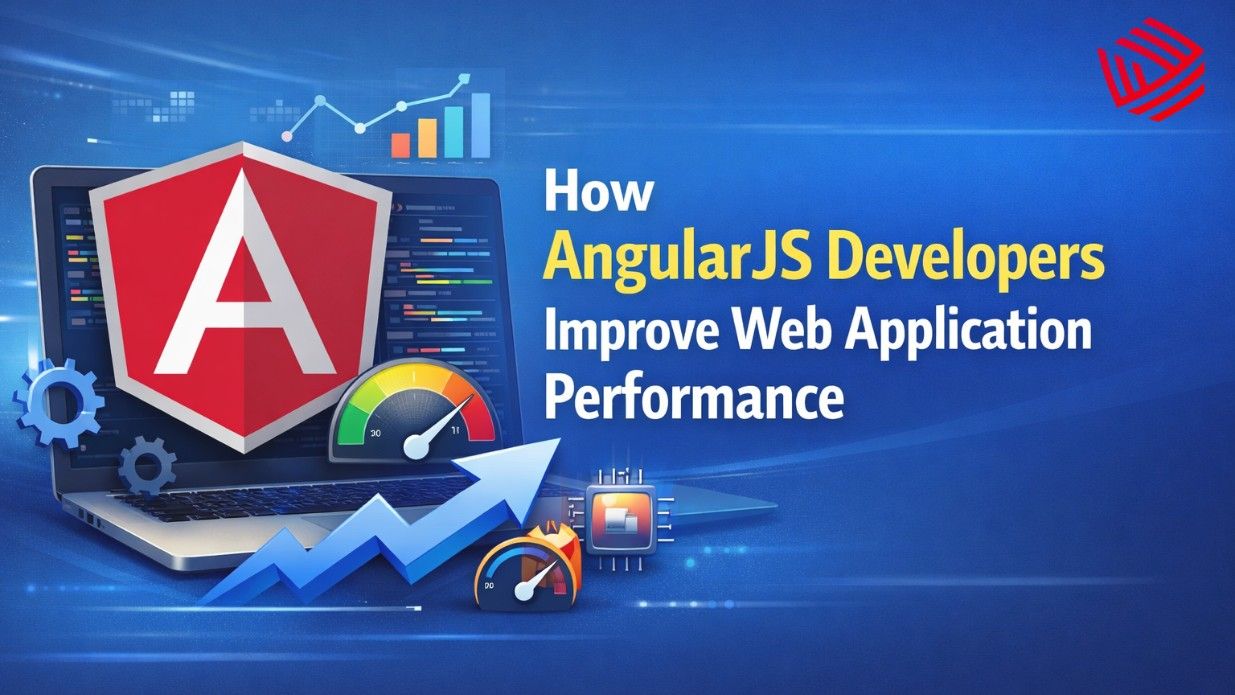
And here’s the good news: skilled AngularJS developers can dramatically improve web application performance without rewriting everything from scratch.
This guide explains how experienced AngularJS developers make apps faster, more responsive, and more stable using practical, real-world methods.
No hype. No fluff. Just what actually works.
Why Performance Matters More Than Ever in 2026
Let’s start with something simple.
When a web application feels slow, users:
- Click twice
- Refresh unnecessarily
- Submit duplicate forms
- Abandon the session
From a business perspective, slow performance means:
- Higher bounce rates
- Lower conversions
- Increased server load
- Poor SEO signals
- Reduced customer trust
In mobile-like web apps and admin dashboards, even small delays feel painful.
AngularJS applications, especially older ones, can suffer from:
- Heavy digest cycles
- Too many watchers
- Large DOM structures
- Inefficient API calls
- Poor state management
But none of these are unsolvable.
For teams focused on building scalable products, performance tuning is not optional—it’s essential for delivering faster AngularJS apps that retain users and improve engagement metrics.
Understanding How AngularJS Works (Without Getting Too Technical)
Before improving performance, developers must understand what slows AngularJS down.
AngularJS relies on something called the digest cycle. Every time something changes in the model, Angular checks all watchers to see what needs updating in the view.
If your application has:
- Hundreds or thousands of watchers
- Large dynamic lists
- Nested scopes
- Continuous polling
Performance can drop quickly.
Improving performance is often about reducing unnecessary work inside this cycle.
Good AngularJS developers focus on minimizing change detection overhead and optimizing rendering behavior to enable Faster App Building without compromising stability or maintainability.
Reducing Watchers: The First Big Win
One of the most common performance problems in AngularJS apps is too many watchers.
Each ng-repeat, ng-model, or binding creates watchers. More watchers mean more work during each digest cycle.
How Developers Fix This
Instead of blindly using two-way data binding everywhere, experienced developers:
- Use one-time bindings (
::) when data doesn’t change - Replace unnecessary
ng-modelbindings - Avoid deep nested scopes
- Simplify templates
For example, in dashboards where data loads once and rarely changes, one-time binding significantly reduces processing overhead.
In one enterprise analytics tool I worked on, converting large tables to one-time bindings reduced rendering time by nearly 40%.
That’s a huge improvement without changing architecture.
Optimizing ng-repeat for Large Data Sets
ng-repeat is powerful, but when used carelessly, it becomes expensive.
Rendering hundreds or thousands of DOM elements slows down the browser—not just AngularJS.
What Skilled Developers Do
Instead of rendering everything at once, they:
- Use
track byto improve identity tracking - Implement pagination
- Apply infinite scrolling
- Load data in chunks
For example, instead of:
ng-repeat="item in items"
Use:
ng-repeat="item in items track by item.id"
This prevents Angular from re-rendering entire lists unnecessarily.
In admin panels with large tables, this change alone can dramatically improve responsiveness.
Limiting the Digest Cycle
Sometimes performance issues happen because digest cycles are triggered too frequently.
Common causes:
- Uncontrolled
$watchusage - Excessive
$apply()calls - Frequent polling
Smarter Approach
Experienced developers:
- Remove unnecessary
$watch - Use
$timeoutwisely - Trigger manual updates only when needed
- Avoid deep object watching
If you’re watching entire objects instead of specific properties, Angular does more work than required.
Fine-tuning watchers is like cleaning background processes in a mobile app. Less noise means better speed.
Minimizing DOM Manipulation
AngularJS handles DOM efficiently—but heavy manipulation still hurts performance.
When developers mix jQuery-style manual DOM operations with AngularJS bindings, things get messy.
Better approach:
- Use Angular directives properly
- Avoid direct DOM access
- Reduce nested DOM structures
In complex forms, simplifying layout and reducing nested div layers often improves responsiveness.
Remember: the browser renders the DOM. The lighter it is, the faster it works.
Smart API Handling and Data Loading
Performance is not just about frontend rendering. Network behavior matters equally.
Many AngularJS apps slow down because:
- Too many API calls
- Duplicate requests
- Blocking UI during loading
Experienced developers improve performance by:
- Debouncing search inputs
- Caching API responses
- Combining multiple API calls into one
- Loading critical data first
For example, in a search filter, instead of sending an API request on every keystroke, developers debounce input by 300–500 milliseconds.
This simple change reduces server load and improves perceived performance.
Using Lazy Loading for Modules
Large AngularJS applications often bundle everything into one massive file.
That increases initial load time.
Better approach:
- Split features into modules
- Load modules when needed
- Use route-based lazy loading
For example:
- Dashboard module loads first
- Reporting module loads only when user navigates
- Admin module loads separately
This approach reduces initial bundle size and improves first paint time.
Users care most about how fast the app opens—not how fast hidden pages load.
Optimizing Assets and Bundles
AngularJS performance is not just about framework logic.
Real-world apps include:
- Images
- CSS
- JavaScript libraries
- Fonts
Developers improve performance by:
- Minifying JavaScript
- Compressing images
- Enabling GZIP or Brotli compression
- Using CDN for static assets
Even in 2026, these basics matter.
I’ve seen cases where simple asset compression reduced page load time by over two seconds.
That’s massive.
Improving Mobile Performance
Many AngularJS apps are used on tablets and mid-range Android devices.
From my Android app experience, I’ve learned something critical:
Mid-tier devices struggle with heavy rendering.
AngularJS developers improve mobile performance by:
- Reducing animation complexity
- Avoiding heavy transitions
- Simplifying UI layouts
- Reducing JavaScript execution time
Sometimes, performance improvements are about design simplicity, not just code optimization.
Avoiding Memory Leaks
Memory leaks silently kill performance.
In AngularJS, leaks happen when:
- Event listeners aren’t removed
- Intervals keep running
- Detached scopes remain referenced
Good developers always:
- Clean up
$intervaland$timeout - Remove event listeners on
$destroy - Destroy unused scopes
Memory leaks cause slowdowns over time. Fixing them keeps apps stable even after hours of use.
Caching for Better Speed
Caching reduces repeated work.
AngularJS developers use:
- HTTP interceptors
- Local storage
- In-memory caching
For example, configuration data that rarely changes should not be fetched repeatedly.
Caching reduces server calls and speeds up rendering.
Using Performance Profiling Tools
Improvement without measurement is guesswork.
Experienced developers use tools like:
- Chrome DevTools Performance tab
- Lighthouse
- Angular Batarang (legacy tool)
- Network monitoring
Profiling reveals:
- Slow scripts
- Heavy rendering tasks
- Blocking API calls
In one case, profiling showed that a single filter function was running thousands of times unnecessarily. Fixing that made the app instantly smoother.
Refactoring Legacy Code Gradually
Many AngularJS apps are old.
Complete rewrites are expensive.
Smart teams:
- Refactor gradually
- Remove unnecessary dependencies
- Modularize step by step
- Improve performance incrementally
You don’t need a full migration to improve speed.
Small, targeted optimizations often deliver big results.
Improving User-Perceived Performance
Sometimes performance improvement is psychological.
For example:
- Show loading skeletons
- Display progress indicators
- Preload essential data
- Use optimistic UI updates
Even if processing takes time, users feel comfortable when they see feedback.
Perception matters as much as raw speed.
Server-Side Improvements Also Matter
AngularJS performance depends on backend speed too.
If APIs are slow, frontend optimizations won’t help much.
Developers often collaborate with backend teams to:
- Optimize queries
- Reduce payload size
- Implement pagination
- Enable caching
Frontend and backend must work together.
Real-World Example
A logistics management platform built in AngularJS was facing complaints:
- Slow dashboard
- Lagging filters
- Unresponsive tables
Instead of rewriting, the team:
- Reduced watchers
- Implemented one-time binding
- Added pagination
- Debounced search
- Optimized API responses
Within weeks:
- Load time improved by 45%
- Server load reduced significantly
- User complaints dropped
No full migration needed.
Just smart performance work.
When to Consider Migration
Let’s be honest.
If your AngularJS app is:
- Extremely large
- Poorly structured
- No longer maintained
- Hard to refactor
Migration to modern Angular or another framework may make sense.
But performance optimization should always be attempted first.
Many AngularJS apps can remain stable and efficient with proper tuning.
Final Thoughts
AngularJS may not be the newest framework in 2026, but it is far from useless.
With experienced developers, AngularJS applications can:
- Load faster
- Feel smoother
- Use less memory
- Handle large data sets efficiently
Performance improvement is not magic. It is careful observation, smart refactoring, and understanding how the framework works internally.
If you focus on reducing unnecessary processing, optimizing rendering, and managing data wisely, your AngularJS application can still perform like a modern web app.
And users? They won’t care which framework you use.
They will only care that it works fast.