In 2026, UI UX design is no longer just about creativity. It is about speed, clarity, collaboration, and continuous improvement. Deadlines are tighter. Clients expect faster iterations. Products evolve weekly instead of quarterly, constantly shaping modern apps that must adapt quickly to user expectations.
As someone who designs interfaces daily and builds production-ready frontends using Tailwind CSS, I have experienced this shift closely. The demand is not just to “design something beautiful.” The expectation is to design, test, prototype, document, and hand off—quickly and accurately.
This is where AI tools for UI UX designers genuinely help.
Not as magic replacements. Not as shortcuts that remove thinking. But as smart assistants that handle repetitive work, suggest better options, and speed up development.
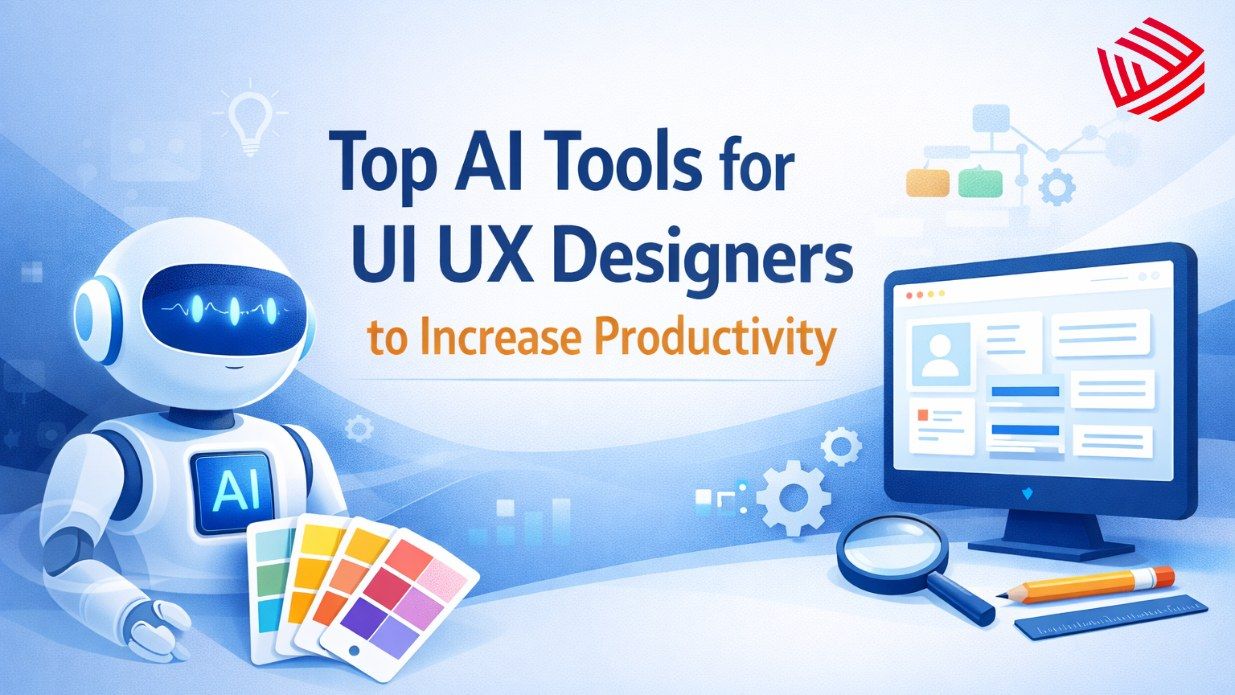
In this guide, I will walk you through the top AI tools for UI UX designers to increase productivity in 2026. I will explain how they actually help, when to use them, and where they might not be the right fit. Everything is based on practical, real-world experience.
Let’s begin with the bigger picture.
Why AI Tools Matter for UI UX Designers in 2026
Design is no longer a linear process.
You research.
You sketch.
You wireframe.
You prototype.
You test.
You revise.
You hand off.
You fix development gaps.
And often, you repeat this cycle several times.
The problem? Many parts of this workflow are repetitive:
- Writing placeholder copy
- Generating design variations
- Creating icons and illustrations
- Preparing documentation
- Converting designs into code
- Running usability feedback analysis
AI tools reduce time spent on repetitive tasks so designers can focus on what truly matters: user experience and problem-solving, while ensuring UI consistency across multiple screens and product touchpoints.
When used correctly, AI does not replace creativity. It amplifies it.
What Makes a Good AI Tool for UI UX Designers?
Before listing tools, let’s define what makes them valuable.
A good AI tool should:
- Save measurable time
- Reduce manual effort
- Improve decision-making
- Integrate with existing workflow
- Not create unnecessary complexity
If a tool makes your workflow harder, it is not increasing productivity. It is adding friction.
Now let’s explore the tools that genuinely make a difference.
1. Figma AI Features – Smarter Wireframing and Layout Suggestions
Figma remains the most widely used design platform in 2026. Over the last few years, its AI capabilities have grown significantly.
How It Helps
Figma AI can now:
- Generate layout suggestions from prompts
- Convert rough wireframes into structured UI blocks
- Suggest spacing improvements
- Auto-adjust alignment inconsistencies
- Generate content placeholders
For example, if I’m building a SaaS dashboard, I can prompt it with:
“Design a contemporary analytics dashboard interface that includes a side navigation menu and key performance indicator (KPI) summary cards for clear data visualization.”
Within seconds, I get a structured starting point. It’s not final. But it saves 20–30 minutes of manual setup.
Real Productivity Impact
Instead of starting from a blank canvas, you refine something that already exists. That mental shift alone reduces friction.
As a Tailwind CSS developer, I also appreciate how structured layouts translate better into utility-first classes. Cleaner structure in design means cleaner code later.
2. Uizard – From Sketch to Digital Wireframe
Uizard is particularly useful during early-stage brainstorming.
What It Does
- Converts hand-drawn sketches into digital wireframes
- Generates app screens from text prompts
- Quickly creates clickable prototypes
If you work with non-technical founders or product managers, this tool is powerful.
Instead of waiting for pixel-perfect Figma files, you can turn napkin sketches into usable layouts within minutes.
Where It Works Best
- Startup MVP design
- Rapid validation
- Early-stage app ideation
It is not meant for polished final designs. But for speed? It is impressive.
3. Adobe Firefly – AI Visual Asset Generation
Visual content takes time.
Icons.
Backgrounds.
Illustrations.
Hero graphics.
Adobe Firefly helps generate:
- Custom UI illustrations
- Background textures
- Brand-consistent imagery
- Style variations
Instead of browsing stock libraries for an hour, you describe what you need and refine results.
When designing marketing landing pages in Tailwind CSS, I often need consistent visuals that match color themes. Firefly allows quick generation of images aligned with brand tone.
This drastically reduces creative block.
4. ChatGPT – UX Writing and Microcopy Assistant
UI UX designers often underestimate how much time goes into writing.
Buttons.
Error messages.
Empty states.
Tooltips.
Onboarding text.
Clear microcopy improves usability.
ChatGPT helps by:
- Rewriting confusing text
- Simplifying instructions
- Generating onboarding flows
- Suggesting accessibility-friendly labels
For example, instead of writing:
“Submission unsuccessful due to invalid input.”
You can generate a friendlier version:
“Please check the highlighted fields and try again.”
That small change improves user experience.
The key is not copying blindly. It is refining suggestions to match your brand voice.
5. Framer AI – From Design to Live Website Faster
Framer’s AI capabilities allow designers to:
- Generate responsive sections
- Convert designs into live websites
- Edit layouts with text prompts
For portfolio designers and landing page projects, this reduces the gap between design and deployment.
Even if you eventually build production UI with Tailwind CSS, Framer helps validate layout and responsiveness quickly.
It speeds up experimentation.
6. Khroma – AI-Powered Color Palette Generation
Color selection can be time-consuming.
Khroma learns your color preferences and generates palettes tailored to your taste.
Instead of randomly picking colors, you get:
- Accessible contrast combinations
- Balanced UI palette suggestions
- Typography color previews
When working with Tailwind CSS, defining color scales early saves development rework. AI-assisted palette generation helps avoid inconsistent shades.
7. Galileo AI – Prompt-Based Interface Generation
Galileo AI focuses specifically on UI generation.
You describe an interface. It generates polished UI designs.
For example:
“Design a mobile banking interface that displays recent transactions along with clearly tracked savings targets, providing users with an organized and goal-focused financial overview.”
You get multiple layout options.
It’s especially helpful for:
- Exploring layout variations
- Rapid concept presentation
- Client demonstrations
But always refine manually. AI gives a strong base, not final perfection.
8. Maze – AI Insights from User Testing
Productivity is not just about designing fast. It is about validating smartly.
Maze analyzes usability testing data and provides insights:
- Heatmaps
- Drop-off points
- User journey friction
Instead of manually analyzing feedback spreadsheets, you get summarized insights.
That reduces research analysis time significantly.
9. Dovetail – Research Analysis Made Easier
UX research often involves:
- Interview transcripts
- Survey responses
- Notes
Dovetail uses AI to:
- Tag themes automatically
- Cluster similar feedback
- Summarize research findings
This shortens the research-to-action cycle.
10. Locofy – Converting Design to Code Faster
As someone who builds with Tailwind CSS, I understand the gap between design and development.
Locofy helps convert Figma designs into front-end code structures.
While you should never rely blindly on generated code, it:
- Speeds up layout scaffolding
- Provides base components
- Reduces repetitive markup writing
You still refine and optimize. But it saves time during initial setup.
How AI Tools Improve Tailwind CSS Workflow
Since I work extensively with Tailwind CSS, let me explain a practical workflow.
Traditional approach:
- Design in Figma
- Manually interpret spacing
- Create component structure
- Write utility classes
- Adjust responsive breakpoints
With AI assistance:
- Figma suggests spacing improvements
- AI generates structured layout blocks
- Tools like Locofy provide base markup
- AI helps generate component documentation
The result?
Cleaner UI structure. Faster implementation. Fewer revisions.
AI does not write perfect Tailwind classes. But it helps reduce guesswork.
Where AI Tools Can Slow You Down
It is important to be honest.
AI tools can:
- Generate generic designs
- Encourage over-reliance
- Reduce original thinking
- Create similar-looking interfaces
Productivity is not about using every AI tool. It is about choosing wisely.
If a tool requires constant correction, it may not be saving time.
How to Choose the Right AI Tool
Ask yourself:
- Does it save at least 20% time?
- Does it integrate smoothly with my workflow?
- Does it improve decision-making?
- Does it reduce repetitive tasks?
If yes, keep it.
If not, remove it.
Minimal tool stack equals maximum focus.
The Human Element Still Matters
In 2026, clients can also use AI.
So what differentiates you?
- Understanding user psychology
- Solving business problems
- Creating intuitive navigation
- Balancing aesthetics and usability
AI suggests.
Humans decide.
Your value is judgment, empathy, and strategy.
Real-World Example: AI in a SaaS Dashboard Project
Recently, I worked on a SaaS analytics platform.
Here’s how AI helped:
- Generated initial dashboard layout ideas in Figma
- Used Khroma for palette consistency
- Used ChatGPT for microcopy refinement
- Used Maze to analyze usability feedback
- Used Locofy for layout scaffolding
Result:
- Reduced design time by 35%
- Reduced iteration cycles
- Faster developer handoff
AI did not replace design skills. It reduced friction.
The Future of AI Tools for UI UX Designers
AI tools will become:
- More context-aware
- Better at accessibility compliance
- Integrated directly into design systems
- Stronger at predicting user behavior
But designers who rely only on automation will struggle.
The future belongs to designers who:
- Understand user needs deeply
- Use AI intelligently
- Maintain originality
Final Thoughts
The top AI tools for UI UX designers to increase productivity are not about shortcuts. They are about smarter workflows.
Used wisely, they:
- Reduce repetitive tasks
- Improve speed
- Enhance creativity
- Strengthen research
- Improve collaboration
But your thinking remains the most powerful tool.
Master your craft. Use AI as support. Stay human in your design decisions.
That balance is what defines successful designers in 2026.