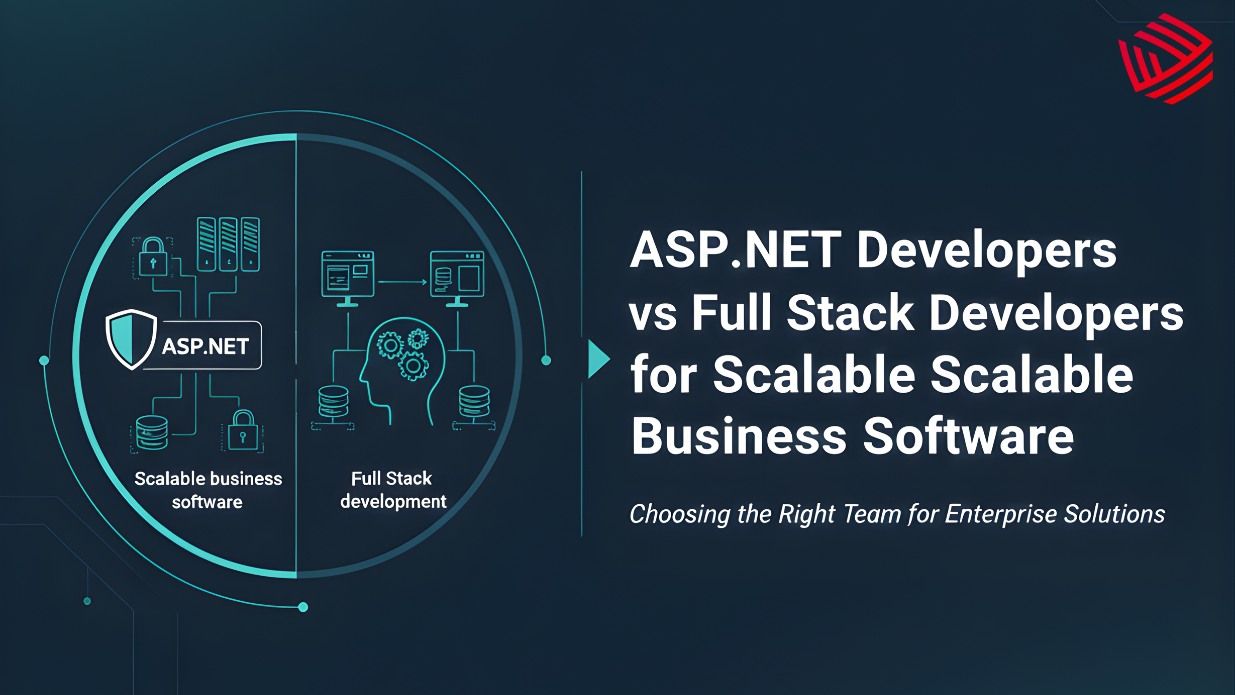
When building scalable business software — like an ERP, CRM, e‑commerce platform, or internal SaaS product — one of the first decisions is: should you hire ASP.NET developers or full stack developers? Both can deliver powerful, high‑performance applications, but they bring different strengths, costs, and long‑term trade‑offs.
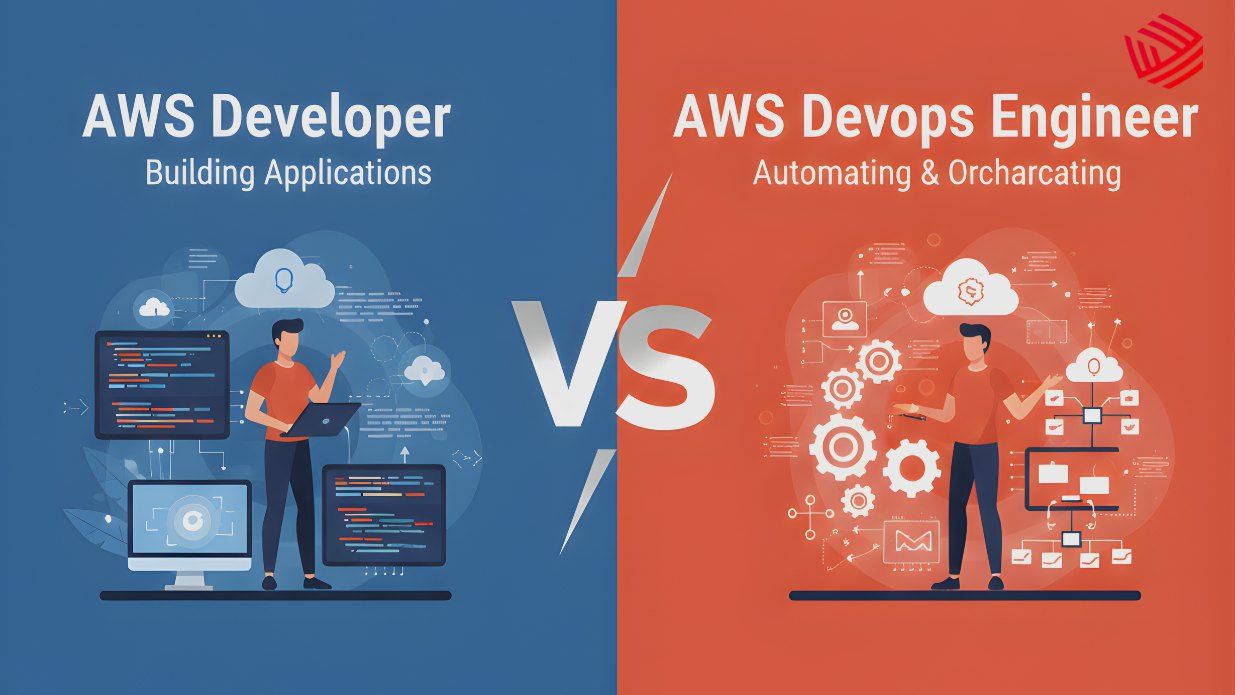
Experts in ASP.NET specialize in Microsoft’s ecosystem, utilizing C#, ASP.NET Core, SQL Server, and Azure to create secure, high-performance, and enterprise-ready applications that scale efficiently. Full stack developers, on the other hand, work across the entire tech stack — frontend (React, Angular, Vue), backend (Node.js, Python, .NET, etc.), databases, and DevOps — giving them flexibility to build and maintain a complete product.
For a growing business, the right choice depends on several factors: the complexity of your software, your team size, your budget, and how much control you want over architecture and performance. This guide compares ASP.NET developers vs full stack developers for scalable business software, so you can decide which model fits your project best.
What Is an ASP.NET Developer?
An ASP.NET developer is a backend or full‑stack specialist who primarily uses Microsoft’s .NET platform to build web applications, APIs, and services. They are deeply familiar with:
- C# and the .NET runtime (including .NET 6/7/8 and .NET Core)
- ASP.NET Core for building REST APIs, MVC apps, and Razor Pages
- Entity Framework or Dapper for database access
- SQL Server (or other databases like PostgreSQL, MySQL)
- Azure, IIS, and related Microsoft cloud and deployment tools
ASP.NET developers typically focus on the server side: business logic, data models, security, performance, and integration with other systems. Many also handle frontend work using Blazor, Razor Pages, or by integrating with modern JavaScript frameworks.
Because they work within a mature, opinionated ecosystem, ASP.NET developers are especially strong in:
- Building secure, high‑performance business applications
- Integrating with Microsoft products (Office 365, Active Directory, Dynamics)
- Scaling applications on Windows and Azure
- Maintaining large, complex codebases over many years
This makes them a natural fit for enterprise software, internal tools, and regulated industries like finance, healthcare, and government.
What Is a Full Stack Developer?
A full stack developer is a versatile professional capable of building and managing every component of a web or mobile application, from the user interface to the underlying server logic and databases:
- Frontend: HTML, CSS, JavaScript, and frameworks like React, Angular, or Vue
- Backend: Server logic, APIs, and services using Node.js, Python, Ruby, .NET, PHP, etc.
- Database: Designing and querying relational (PostgreSQL, MySQL) or NoSQL (MongoDB, Redis) databases
- DevOps & Deployment: CI/CD, cloud platforms (AWS, Azure, GCP), containers (Docker), and monitoring using Top Tools and IDEs commonly adopted in modern development workflows
Full stack developers are generalists by design. They can take a feature from idea to production without needing separate frontend and backend teams. This makes them very valuable for startups, small teams, and projects where speed and flexibility matter more than deep specialization.
For scalable business software, a full stack developer can:
- Build a complete MVP quickly
- Make trade‑offs between frontend and backend performance
- Own the entire user journey, from UI to database
- Adapt to changing requirements and new technologies
However, they may not have the same depth in any one area (like .NET internals or advanced cloud architecture) as a specialist.
When to Choose ASP.NET Developers
ASP.NET developers are the best choice when your business software has these characteristics:
1. Enterprise‑Grade Requirements
If your software needs to handle:
- High transaction volumes (e.g., order processing, inventory, payroll)
- Strict security and compliance (GDPR, HIPAA, PCI‑DSS, RPwD Act, etc.)
- Integration with Microsoft ecosystems (Active Directory, Azure AD, Office 365, Dynamics)
- Long‑term maintenance over 5–10+ years
then ASP.NET developers are ideal. The .NET platform is battle‑tested in large enterprises and provides strong built‑in features for security, performance, and scalability.
2. Complex Business Logic
Business software often has intricate rules: workflows, approvals, validations, reporting, and integrations. ASP.NET developers excel at:
- Modeling complex domains with clean C# code
- Building robust APIs and microservices
- Writing maintainable, testable code with clear separation of concerns
- Optimizing database queries and caching strategies
This reduces bugs, makes audits easier, and lowers the cost of change over time.
3. High Performance and Scalability
ASP.NET Core is one of the fastest web frameworks available. It’s designed to:
- Handle thousands of concurrent requests with low latency
- Scale horizontally across multiple servers or containers
- Integrate smoothly with Azure, Kubernetes, and load balancers
If your business software must perform well under heavy load (e.g., during peak sales, reporting periods, or user spikes), ASP.NET developers can design and tune the system for maximum throughput.
4. Existing .NET Ecosystem
If your company already uses:
- .NET for internal tools, legacy systems, or desktop apps
- SQL Server as the primary database
- Azure for hosting and cloud services
then hiring ASP.NET developers ensures consistency, reuse of skills, and easier integration. It also reduces the learning curve for your internal IT and support teams.
When to Choose Full Stack Developers
Full stack developers are the better fit when your project has these traits:
1. Fast MVP and Rapid Iteration
Startups and fast‑moving teams often need to:
- Launch an MVP in weeks, not months
- Test multiple ideas and pivot quickly
- Build a simple but polished user experience
A full stack developer can:
- Design the UI, build the backend, and connect the database in one flow
- Avoid handoffs and communication overhead between specialists
- Make quick decisions about trade‑offs (e.g., “Can we use a simpler database now and upgrade later?”)
This speed is crucial when validating a business idea or competing in a crowded market.
2. Limited Budget and Small Team
Hiring a full stack developer is often more cost‑effective than building a large team of specialists. One skilled full stack developer can:
- Replace the need for separate frontend and backend roles in the early stages
- Reduce management overhead and coordination costs
- Deliver more features per rupee, especially for mid‑sized projects
For small and medium businesses, this makes full stack developers a practical choice for building scalable software without a huge upfront investment.
3. Cross‑Platform and Modern Tech Stack
If your business software needs to:
- Run on multiple platforms (web, mobile, desktop)
- Use modern, flexible technologies (React, Node.js, serverless, etc.)
- Seamlessly connect applications with diverse external platforms, APIs, and cloud-based services
then full stack developers are well‑suited. They are comfortable with:
- JavaScript/TypeScript ecosystems
- REST and GraphQL APIs
- Cloud platforms (AWS, GCP, Azure) and serverless functions
- Modern frontend frameworks and state management
This flexibility helps future‑proof your product as technology evolves.
4. Strong Focus on User Experience
Business software is no longer just “functional” — users expect it to be intuitive, fast, and mobile‑friendly. Full stack developers often:
- Have a strong sense of UI/UX and can implement modern designs
- Optimize frontend performance (lazy loading, caching, responsive layouts)
- Build real‑time features (notifications, dashboards, live updates)
- Iterate quickly based on user feedback
If a great user experience is a key differentiator for your product, full stack developers can deliver that end‑to‑end.
Comparing ASP.NET vs Full Stack for Scalability
Scalability means your software can grow in users, data, and features without breaking or slowing down. Here’s how ASP.NET developers and full stack developers approach scalability differently.
1. Architecture and Design
ASP.NET developers tend to follow proven enterprise patterns:
- Layered architecture (presentation, business logic, data access)
- Microservices or monoliths with clear boundaries
- Strong emphasis on contracts (APIs, DTOs, validation)
Heavy use of design patterns (repository, unit of work, dependency injection)
Full stack developers often prioritize speed and flexibility:
- Simpler, more pragmatic architectures (e.g., monolith with clear modules)
- Rapid prototyping and iterative improvements
- Willingness to refactor as the product grows
This works well for early‑stage products but may require more rework as complexity increases.
2. Performance and Throughput
- ASP.NET (Core) is optimized for high throughput and low latency.
- Built‑in support for async/await, caching, and efficient request handling
- Excellent performance on Windows and Azure, with good cross‑platform support
- Strong tooling for profiling, monitoring, and optimization, often paired with observability stacks where teams compare Kibana vs Grafana for system monitoring and performance insights
Full stack (Node.js, Python, etc.) can also be highly performant, but:
- Performance depends heavily on the developer’s choices (framework, database, caching)
- May require more tuning to match .NET’s raw throughput
- Often shines in I/O‑heavy scenarios (APIs, real‑time apps, integrations)
For many business apps, this is more than sufficient, especially with proper architecture.
3. Long‑Term Maintainability
ASP.NET projects benefit from:
- Strong typing (C#) that catches errors at compile time
- Mature IDEs (Visual Studio) with excellent refactoring and debugging
- Clear separation of concerns and well‑defined patterns
- Long‑term support from Microsoft
This reduces technical debt and makes it easier to onboard new developers years later.
Full stack projects rely more on:
- Discipline in code structure, testing, and documentation
- Consistent use of linters, formatters, and CI/CD
- Team culture around code reviews and best practices
With good practices, full stack apps can be very maintainable, but they are more vulnerable to “spaghetti code” if not managed carefully.
4. Team and Hiring Strategy
ASP.NET developers are specialists:
- Easier to define clear roles (backend, frontend, DevOps)
- Better for large teams where deep expertise matters
- May be harder to find in some regions, but strong demand in India and globally
Full stack developers are generalists:
- Great for small teams and lean startups
- Can wear multiple hats, reducing the need for many hires
- Very common in the Indian tech market, with a large talent pool
For scalable business software, many companies start with full stack developers for the MVP and then bring in ASP.NET specialists as the product grows and complexity increases.
Cost and Time Comparison
Cost and time are critical factors when choosing between ASP.NET and full stack developers.
1. Development Cost
- ASP.NET developers (specialists):
- Often command higher rates due to deep .NET expertise
- May require more roles (frontend, backend, DevOps) for a complete team
- Higher upfront cost, but potentially lower long‑term maintenance
- Full stack developers:
- Typically more affordable per person
- Can cover multiple roles, reducing headcount
- Lower initial cost, but may need more refactoring as the app scales
For a mid‑sized business app, a full stack developer is usually cheaper to hire initially. For large, complex enterprise systems, ASP.NET specialists often provide better value over time.
2. Time to Market
- ASP.NET developers are best when:
- Requirements are well‑defined and stable
- Security, compliance, and performance are top priorities
- You can afford a longer, more structured development cycle
- Full stack developers shine when:
- Speed is critical (MVP, tight deadlines)
- Requirements are evolving and need rapid iteration
- You want to launch quickly and improve based on real user feedback
If time to market is the biggest constraint, full stack developers usually deliver faster. If long‑term stability and scalability are more important, ASP.NET developers are the safer bet.
Hybrid Approach: ASP.NET Full Stack Developers
Many modern teams use a hybrid model: ASP.NET full stack developers. These are developers who:
- Use C# and ASP.NET Core for the backend
- Build the frontend with React, Angular, or Blazor
- Handle databases, APIs, and deployment on Azure or other clouds
This gives you the best of both worlds:
- Deep .NET expertise for performance, security, and scalability
- Flexibility to build modern, responsive UIs
- Ability to own features end‑to‑end, reducing handoffs
For scalable business software, hiring ASP.NET full stack developers is often the sweet spot — especially for SaaS products, internal tools, and regulated applications.
How to Decide: A Practical Checklist
To choose between ASP.NET developers and full stack developers for your scalable business software, ask these questions:
1. What is the primary goal?
- MVP / fast launch → Full stack
- Enterprise system / long‑term product → ASP.NET
2. How complex is the business logic?
- Simple workflows, basic CRUD → Full stack
- Complex rules, approvals, integrations → ASP.NET
3. What is the budget and team size?
- Small budget, small team → Full stack
- Larger budget, growing team → ASP.NET or ASP.NET full stack
4. What is the performance requirement?
- High throughput, low latency → ASP.NET
- Moderate load, good UX → Full stack
5. What is the existing tech stack?
- Already using .NET, SQL Server, Azure → ASP.NET
- Using modern JavaScript, cloud‑native tools → Full stack
6. How important is compliance and security?
- Highly regulated (finance, healthcare, government) → ASP.NET
- Standard web app with basic security → Full stack
If most answers point to “enterprise,” “complex,” “high performance,” and “regulated,” ASP.NET developers are the stronger choice. If the answers lean toward “MVP,” “fast,” “flexible,” and “small team,” full stack developers are likely the better fit.
Final Recommendation
For most scalable business software projects, the best strategy is:
- Start with full stack developers to build a fast, flexible MVP and validate the idea.
- As the product grows in users, data, and complexity, bring in ASP.NET developers (or ASP.NET full stack developers) to harden the backend, improve performance, and ensure long‑term maintainability.
This approach balances speed, cost, and scalability. It lets you move quickly in the early stages while setting a solid foundation for future growth.
If you’re building a long‑term, high‑traffic business application (ERP, CRM, e‑commerce, SaaS), investing in ASP.NET expertise from the start is usually worth it. If you’re a startup or small business testing a new idea, a skilled full stack developer can get you to market faster and cheaper.