In 2026, building an eCommerce website is no longer just about listing products online. Customers expect speed. They expect smooth navigation. They expect clean design that works perfectly on mobile. And most importantly, they expect trust.
If your online store loads slowly, looks outdated, or feels confusing, visitors leave within seconds.
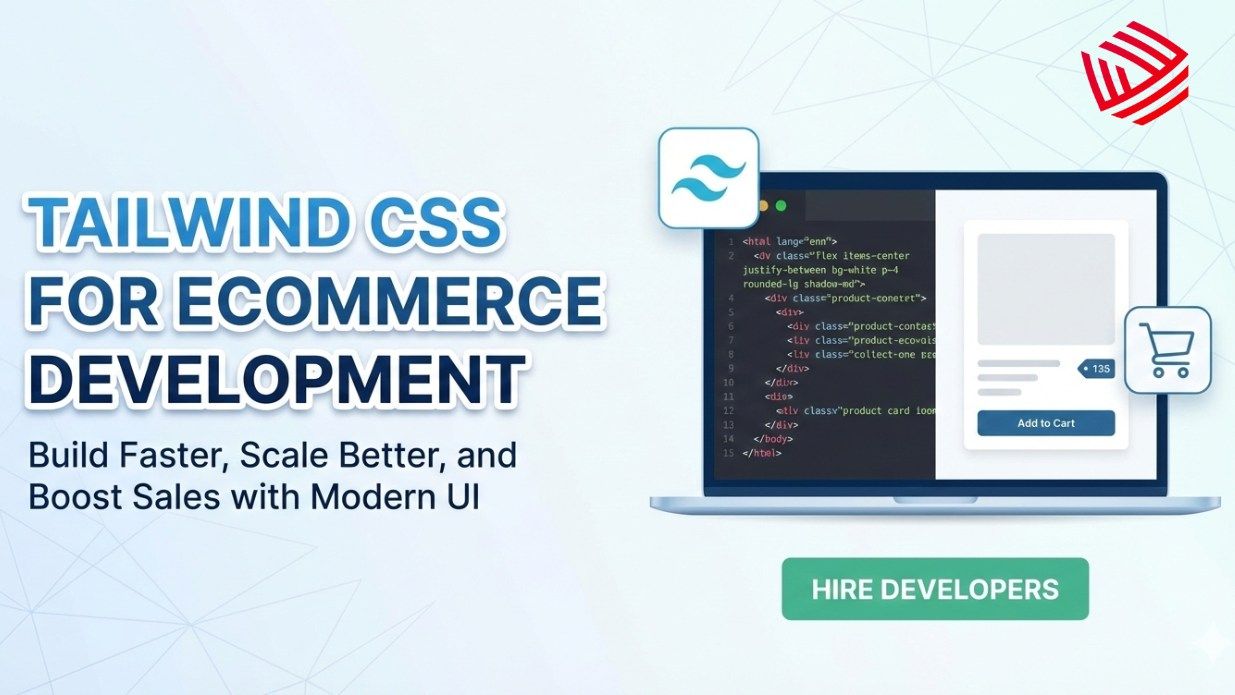
This is exactly where Tailwind CSS developers for eCommerce website development bring real value.
I’ve worked on multiple eCommerce projects—from small D2C brands to large product catalogs with thousands of SKUs—and one thing is clear: the design system and front-end structure directly impact conversions. Tailwind CSS, when used properly, helps teams build fast, flexible, and highly optimized online stores without unnecessary complexity.
This guide explains how Tailwind CSS fits into modern eCommerce development, what skilled developers actually do, and how this approach improves user experience and sales.
Why eCommerce Websites Need a Different Front-End Approach
An eCommerce website is not a simple brochure site.
It has:
- Dynamic product listings
- Filters and sorting
- Cart systems
- Checkout flows
- Payment integration
- User accounts
- Mobile optimization
- Performance constraints
Every design decision affects revenue.
For example:
- A slow product page reduces conversions.
- Poor mobile spacing increases bounce rate.
- Inconsistent UI reduces trust.
- Complex CSS slows development and future updates.
Traditional CSS structures often become messy over time, especially in growing eCommerce platforms. That’s why many modern teams prefer Tailwind CSS.
What Is Tailwind CSS and Why Developers Prefer It in 2026
Tailwind CSS is a utility-first CSS framework. Instead of writing long custom CSS files, developers use small utility classes directly in HTML or components.
For example, instead of writing:
.button {
background-color: blue;
padding: 12px;
border-radius: 8px;
}
You apply:
bg-blue-600 p-3 rounded-lg
This may look different at first, but it creates several advantages:
- No unused CSS
- No naming conflicts
- Faster development
- Better consistency
- Easier scaling
For eCommerce projects where design changes happen frequently, this flexibility becomes extremely valuable and helps teams Speed Up Web Development without compromising structure.
Why Tailwind CSS Works So Well for eCommerce Websites
Let’s go beyond theory and talk about practical benefits.
1. Faster Page Speed
Performance directly impacts sales. A delay of just one second can significantly lower your conversion performance.
Tailwind CSS removes unused styles in production builds. That means smaller CSS files and faster load times.
When I worked on a fashion eCommerce project, we reduced CSS size by nearly 60% compared to a traditional CSS approach. The result? Faster product pages and improved mobile performance.
Speed builds trust.
2. Mobile-First Design Made Simple
In 2026, more than half of eCommerce traffic comes from mobile devices.
Tailwind makes responsive design straightforward:
sm:for small screensmd:for tabletslg:for desktops
Instead of writing complex media queries, developers adjust layouts directly in components.
This helps ensure:
- Product grids adapt properly
- Buttons remain accessible
- Text spacing feels natural
- Checkout flows work smoothly on phones
Mobile-first design is no longer optional. It’s essential.
3. Clean UI Consistency Across Large Stores
Large eCommerce platforms often struggle with inconsistent styling.
One page has rounded buttons. Another doesn’t. Font sizes differ. Spacing feels uneven.
Tailwind allows developers to create a structured design system:
- Defined spacing scale
- Color palette
- Typography rules
- Reusable component patterns
This keeps the entire store visually consistent.
Consistency increases trust, and trust increases conversions.
What Tailwind CSS Developers Actually Do in eCommerce Projects
Hiring a Tailwind CSS developer is not just about someone who knows utility classes.
A skilled developer understands:
- User experience
- Performance optimization
- Component architecture
- Accessibility
- Conversion psychology
Let’s explore their role more clearly.
Designing High-Converting Product Pages
Product pages must answer questions quickly:
- What is this product?
- How much does it cost?
- Is it available?
- Can I trust this brand?
Tailwind CSS helps developers structure product layouts with:
- Clear image galleries
- Prominent call-to-action buttons
- Visible price sections
- Clean review displays
Spacing and hierarchy matter more than fancy animations.
A good Tailwind developer focuses on clarity, not decoration, especially when building Conversion-Driven Web Apps that prioritize usability and revenue growth.
Optimizing Category and Filter Sections
Filtering systems are critical in eCommerce.
Users need to:
- Sort by price
- Filter by brand
- Select size or color
- Adjust rating filters
Tailwind makes building clean sidebar filters or mobile dropdown filters simple and lightweight.
Proper spacing and contrast ensure usability without overwhelming the user.
Improving Checkout Experience
Checkout is where revenue is made—or lost.
Tailwind CSS helps developers create:
- Clean form layouts
- Clear error messages
- Strong visual hierarchy
- Easy mobile navigation
Small improvements in form spacing and button visibility can significantly increase completed purchases.
Tailwind CSS with Modern eCommerce Stacks
In 2026, eCommerce development often uses:
- Next.js
- React
- Vue
- Shopify Hydrogen
- Headless CMS
- Custom APIs
Tailwind integrates smoothly with all of them.
For example:
- React components become easier to style
- Dynamic product grids remain consistent
- Headless commerce UI becomes flexible
Developers can build reusable UI components like:
- Product cards
- Add-to-cart buttons
- Discount badges
- Navigation menus
This reduces development time for future features.
Real-World Example: Fashion D2C Brand
Let me share a real scenario.
A direct-to-consumer clothing brand approached us with issues:
- Slow mobile performance
- Inconsistent UI
- Poor conversion rate
- Hard-to-maintain CSS
We rebuilt the front-end using Tailwind CSS.
Improvements included:
- Simplified product card layouts
- Better image scaling
- Clear pricing sections
- Improved mobile checkout
Results after three months:
- Lower bounce rate
- Higher mobile engagement
- Increased average session time
- Better add-to-cart conversions
The backend remained mostly unchanged. The front-end optimization made the difference.
Tailwind CSS and SEO for eCommerce
Many business owners ask:
Does Tailwind affect SEO?
The answer depends on implementation.
Tailwind itself does not harm SEO. In fact, it often helps because:
- Cleaner code structure
- Faster loading speed
- Better mobile responsiveness
- Reduced CSS bloat
Google values performance and usability. Tailwind supports both when used properly.
However, SEO still requires:
- Proper semantic HTML
- Structured data
- Clean URL structure
- Optimized product descriptions
A Tailwind CSS developer should collaborate with SEO teams, not work in isolation.
Accessibility in eCommerce Design
Accessibility is not optional in 2026.
Users with disabilities must be able to:
- Navigate via keyboard
- Read product descriptions
- Understand button labels
- Complete checkout
Tailwind CSS supports accessibility when developers use:
- Proper color contrast
- Focus states
- Semantic elements
- Clear form labeling
Responsible development builds inclusive experiences.
Common Mistakes in Tailwind eCommerce Projects
Even though Tailwind is powerful, mistakes happen.
Overloading Utility Classes
Some developers add too many classes without structure. This can reduce readability.
The solution is component abstraction and proper formatting.
Ignoring Design System Planning
Jumping straight into development without defining:
- Color palette
- Spacing scale
- Typography
Leads to inconsistency.
Tailwind works best when guided by a clear design system.
Focusing on Looks Instead of Conversion
An eCommerce site should prioritize clarity over decoration.
Animations and flashy effects are secondary.
The primary goal is to help users buy easily.
When Should You Hire Tailwind CSS Developers for eCommerce?
You should consider hiring when:
- Your current site feels outdated
- Mobile performance is weak
- Your CSS code is messy
- You are building a new headless store
- You want faster UI development cycles
A professional Tailwind CSS developer saves time long term.
Cost vs Value: Is It Worth It?
Many businesses worry about development cost.
But consider:
- Slow websites lose sales daily
- Poor design reduces trust
- Inconsistent UI damages brand image
Investing in skilled Tailwind CSS developers often pays back through improved conversions and performance.
It’s not just about styling. It’s about revenue.
Future of Tailwind CSS in eCommerce (2026 and Beyond)
Tailwind continues to evolve.
New trends include:
- Component libraries built on Tailwind
- AI-assisted design systems
- Better performance tooling
- Improved integration with headless commerce
The focus remains on simplicity, speed, and maintainability.
Utility-first CSS is no longer experimental. It is mainstream.
Final Thoughts
Tailwind CSS developers for eCommerce website development play a crucial role in building fast, modern, and conversion-focused online stores.
They do more than style pages.
They:
- Improve user experience
- Increase performance
- Strengthen brand consistency
- Support SEO goals
- Enhance mobile usability
If your eCommerce website needs better speed, cleaner design, and scalable front-end architecture, Tailwind CSS is a strong choice.
And with the right developer, it becomes a powerful growth tool—not just a styling framework.